
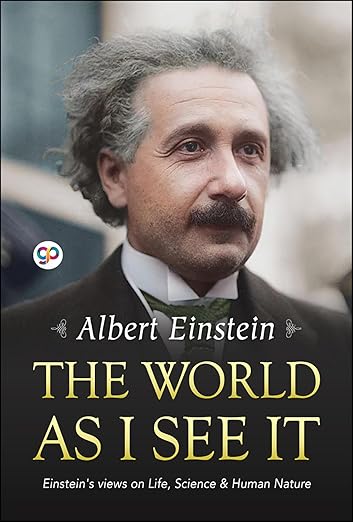
Albert Einstein wrote in his book essay “The World as I See It”: “The true value of a human being can be found in the degree to which he has attained liberation from the self.”
People can see that as a clever philosophical line, something to nod at and then forget.
Or it may also serve as a mirror to oneself.
Because “the self” Einstein points to isn’t your identity. It’s that restless version of us that needs constant feeding. Our ego, image, control, validation, the hunger to be seen as strong, right, successful, and all the other adjectives one can conjure.
And professional life, at least the version many of us have lived in, can become a masterclass in feeding that hunger.
The Professional Ego
Ego doesn’t always show up as arrogance. Sometimes it shows up in its best business attire. That cool; calm, and collective vibe.
The one that looks like:
- Over-working
- Perfectionism
- Being “on” all the time
- Defensiveness
- People-pleasing
- Constantly comparing ourselves to others
Ambition isn’t wrong. In fact, we need it to succeed. But ambition without internal freedom becomes exhausting. You can do all the right things and still feel you’re disappearing behind your own performance. You just feel “off”.
Liberation From Self
In my journey through faith, failure, and recovery, liberation has looked less like self-improvement and more like self-honesty.
Recovery (in any form) is often the first place we learn a hard truth:
The self we protect most is often the self that keeps us stuck.
We cling to a particular image of ourselves because we’re afraid of what happens if people see the truth.
In self-protection mode, we hold on to control because surrender feels like a loss. We don’t want to admit how hard our struggle may be and appear weak.
We seek external validation because not having it feels like rejection.
The turning point comes when we stop managing appearances long enough to examine the truth. When we can say to ourselves in honesty, “I’m not okay.” Or can admit, “I need help.”
That honesty isn’t weakness. It’s the beginning of freedom. It’s the beginning of becoming someone you don’t have to defend.
And it’s okay.
Often in the workplace, it’s the ego that leads. It takes self-awareness to understand where our ego may get in our own way. But when we can correct ourselves, we’ll see it show up in so many positive ways.
A person who’s freer from ego tends to:
- Listen more objectively
- Own their mistakes and fix them right away
- Ask better questions to understand
- Give credit to others when it’s due
- Set boundaries without feeling resentful
- Receive feedback as helpful information, not criticism
That’s not only character. That’s emotional intelligence. Work teams don’t thrive just because people are talented. They thrive because someone created psychological safety, often by being the first to stop performing.
Test Yourself
If you want a simple way to apply Einstein’s line, try this:
When you feel yourself tightening—defensive, anxious, performative—pause and ask:
“What am I protecting right now: my integrity … or my image?”
Integrity might mean an honest conversation. Admitting that you don’t know. It could mean apologizing. Or, even asking for help instead of hiding.
That moment – choosing truth over image – is what “liberation from the self” looks like in real time.
It may not be easy to do, but when you choose truth, you will feel what that freedom means.
The Best Measure in Life
We live in a world that measures value by titles, numbers, clicks, applause, and achievements.
All good and well in their place.
However, Dr. Einstein offered a different measurement: inner freedom.
And I believe this: the more you free yourself from ego, the more you develop the capacity for love, clarity, courage, and peace in all areas of life.
This is something good for a person’s spirit.
It also benefits leadership in professional and personal ways, leading to a life lived with ever-increasing self-awareness.
Reflection question:
Where in your life—at work or at home—would you experience more peace if you stopped protecting your image and started practicing the freedom of truth?
Leave a Reply